
I am a BIG fan of hummus. Really always have been. I feel that I owe a lot to the humble chickpea for just how cheap, versatile, and delicious they are. Sometimes I wonder, is there anything they can’t do?
Well, it may come as a surprise that making my own hummus never came naturally to me. I tried and tried many times, always to find it just lacking something I could never put my finger on. It wasn’t until I moved to Italy in 2018 that I learnt the way. I know what you’re thinking – Italy? Not exactly well known for its hummus-making abilities. But you see, it was in Italy, where I lived with a sweet Italian family, working as their au pair, that my host mum would often make huge vats of hummus. I was totally in love, I knew it was a good day when I saw those sweet, sweet cans of chickpeas in the kitchen. And yes, you read that right – cans plural. I wasn’t joking when I said she used to make vats of it.
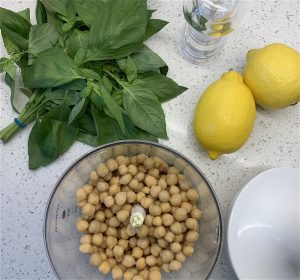
So once I finally got the hang of making hummus, I felt inspired to branch out into the world of flavour. I’ve experimented with many different flavours, but I have to say this particular creation is easily one of my favourites. I suppose you could say it’s somewhere between a hummus and a pesto. The perfect blend of the two.
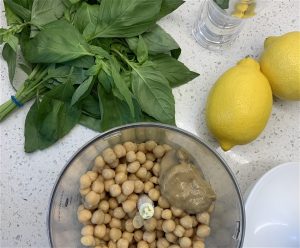
How to make my lemon and basil hummus
This is one of my most simple recipes, that pretty much just calls for putting all the ingredients in a blender and blitzing them together. It’s simple, delicious and utterly fool-proof.
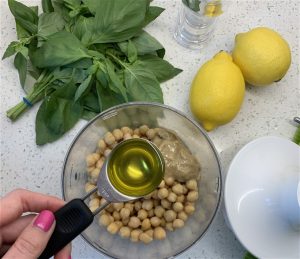
Some of the ingredients do need a little prep, however. For example, you’ll want to ensure that your chickpeas are drained and rinsed, your lemon is zested and juiced, and your basil leaves are plucked. If you have a whole bunch, just take the leaves, leaving the stems out – they can add a slightly bitter taste. Not to mention, they are a little tougher and won’t blend down as well.
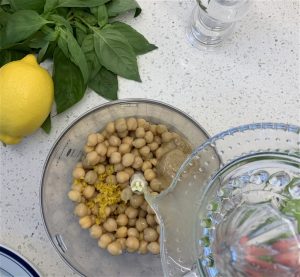
Now all you need to do is add everything to a blender and blend on high. I’ve added oat milk (or your preferred plant milk) to my ingredients list, but generally, I only use this when I find the mixture comes out a little too thick and I think it needs more moisture. It’s certainly not a compulsory step, although I do find it can add a beautiful creamy texture.
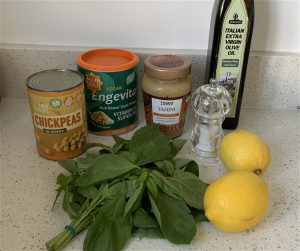
Ingredients used
Chickpeas – the star of the show. Now I do tend to use tinned chickpeas for convenience but you can certainly use dried chickpeas that you have cooked yourself. If you’re using tinned you’ll just want to ensure the chickpeas are drained and rinsed.
Tahini – Shockingly, I spent years really just hating tahini. I used to think it tasted like pencil shavings (I would like to preface this by saying I’m not in the habit of eating pencil shavings). But I’ve learnt to love it. It really adds a depth of flavour to any dish. And of course, it is a vital and wholeheartedly loved component of hummus. You really can’t make it without! Always make sure to give your jar of tahini a good stir – oil separation is quite normal but you want to make sure you’re not just adding the oil to your hummus.
Olive oil – Where’s a hummus without olive oil? Where possible you want to use a high-quality extra-virgin olive oil.
Lemon – When choosing your lemons, be sure to stay away from waxed lemons. Not only are these not vegan (they are often waxed with shellac or beeswax), but since we will be zesting them, you don’t want a plasticky zest.
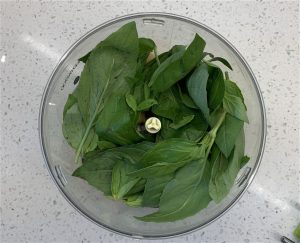
Basil – One of my favourite scents in the world – fresh basil. There’s nothing like it. Of course, you can add more or less than I’ve recommended depending on your preference. Remember the more you add, the more of a green hue your hummus will have.
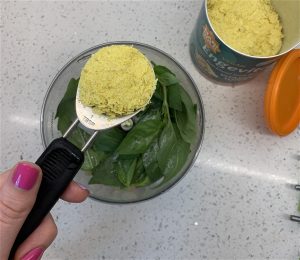
Nutritional yeast – oh where would I be without nutritional yeast. Sometimes I mourn for all the years I went without. Funny isn’t it that most meat-eaters have never so much as heard of it, let alone use it in their recipes. I have to say, there are very few recipes I make now where it doesn’t creep in in some capacity. I like to add it into hummus for that signature cheesy, nutty taste, but it really can do no wrong in my eyes.
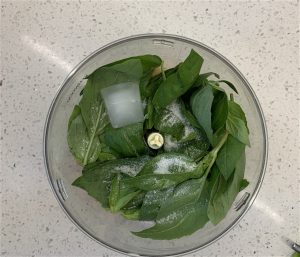
Ice – I know this is a bit of a rogue ingredient, and listen I can’t tell you much about the science behind it, but what I can tell you is that it works. You’ll just have to trust me, I’m afraid. The proof is in the extra smoooooooth hummus you’re about to indulge in.
Salt – to taste.
Oat milk – This really is optional, but I like to add a little splash after blending if I think the consistency is not quite right. It just makes it that little bit creamier. Really you could use any plant milk here though – why not experiment!
Serving suggestions
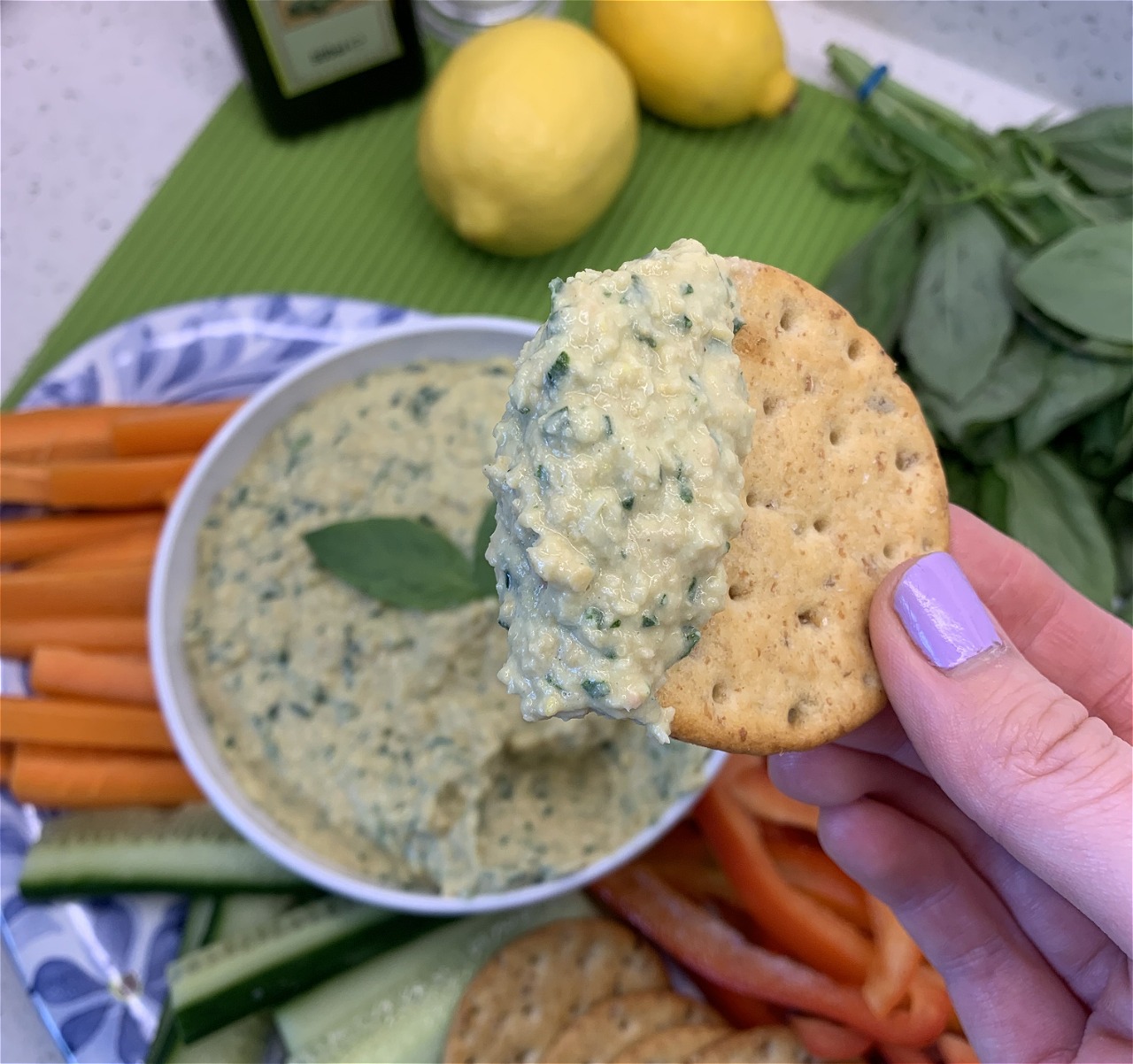
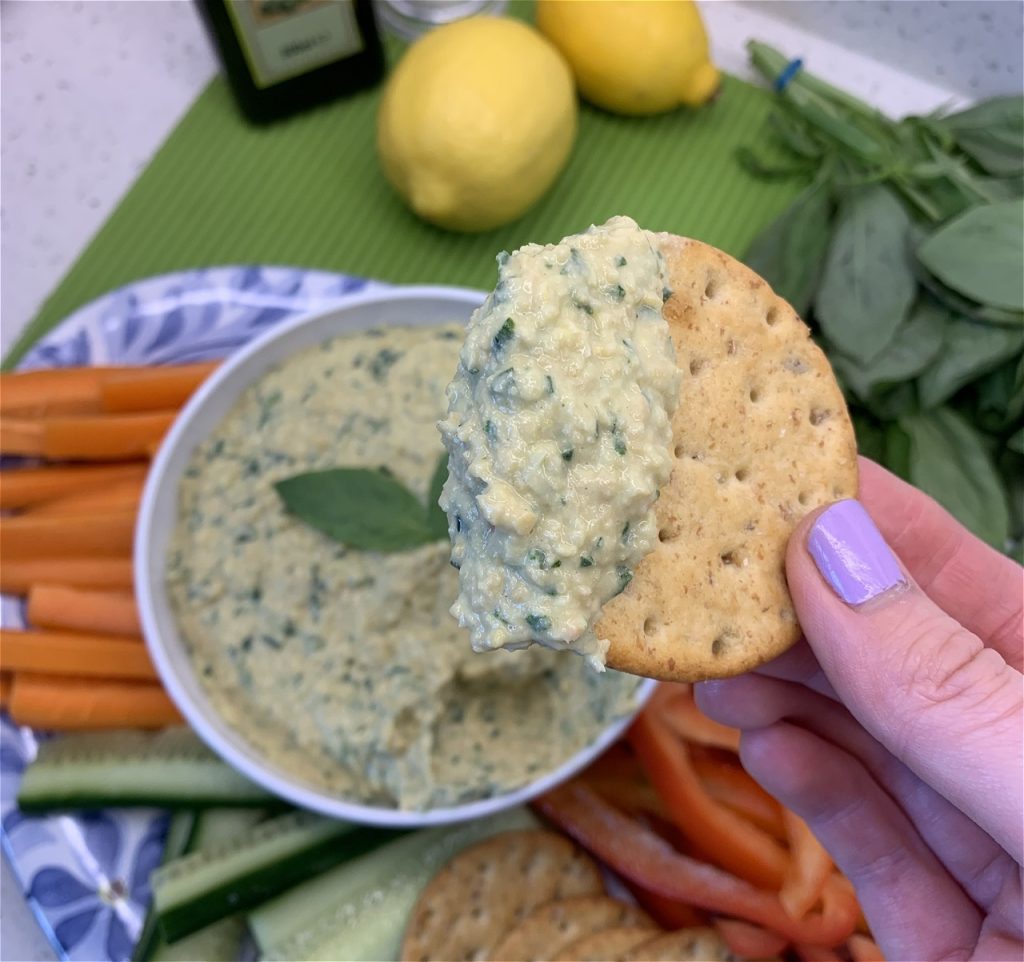
I like to enjoy this in sandwiches, wraps, or as an accompaniment with crudites and crackers. It’s dangerously moreish, so be careful! You’ve been warned.